TEDx Talks are independently organized TED talks across the world, which is about “riveting talks by remarkable people.” TEDx Diliman was my first. This is a review of each of the TED talks that were part of it, done in 18 minutes or less, because that’s the time limit of a TED Talk. Read more about TED here, and check out this really good video on TEDx here.

Fernando Sena: How to draw an eye

with all due respect to someone who “needs no introduction, as his influence as a teacher has touched the lives of some of the most acclaimed and sought after artists today” (via Sena’s youtubevideo caption).

teaching us literally how to draw an eye? towards in the end promoting one’s art classes and one’s own son.

que horror.

the only thing worse than Sena’s TEDx Diliman talk was Nina Lim-Yuson’s talk: 18 minutes or so of shameless self-promotion of Museo Pambata projects.

both beg the question: wherefore art thou ideas worth spreading?

and really. what a waste of time.

Aquilizan-loving!

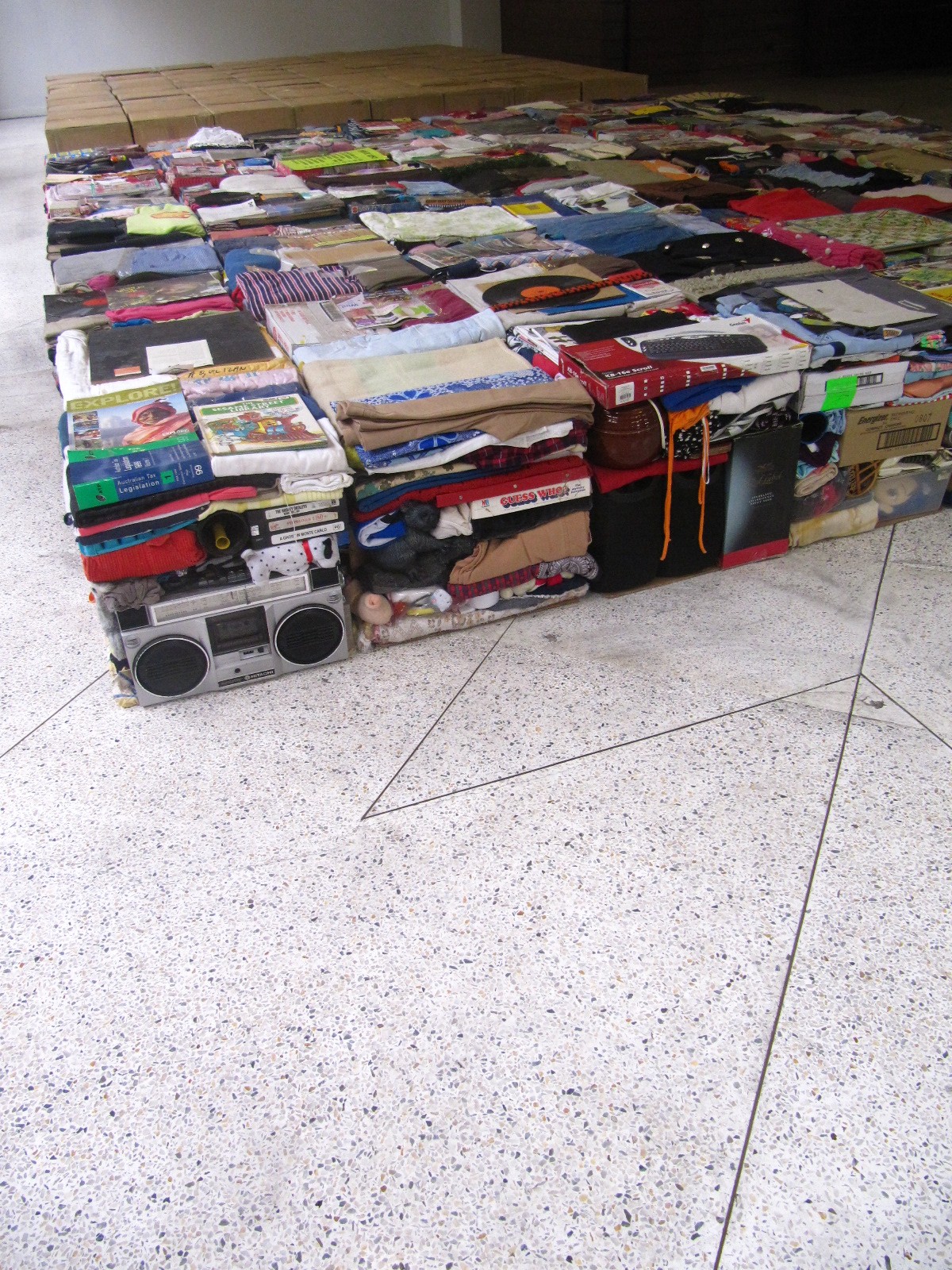
Alfredo and Isabel Aquilizan's Address

Because objects tie us to home, the things we carry are about the self we want to keep. Where there is no packing lightly when objects come to represent who we are, where we’ve been, where we hope to go. Where the usefulness of objects becomes secondary to the task of keeping, if not holding tight, lest self and memory and meaning are lost in the act of leaving.

But notions of migration – not just movement – are carried by the balikbayan box itself as symbol, the box from which these objects sprout. It’s in that way that these objects, while representative of what keeps people tied to spaces and selves left behind, is also about how many lives are rendered ephemeral and transient, in constant flux, in an ongoing process of coming and going.

In that sense, these objects’ meanings cannot but change, rendering stability untrue, putting a spotlight on the ideas that surround migration as a gift to nation. Because these objects are about home. This one from which we come, this one that has made a business out of letting its people go, sacrificing families and children’s upbringing, putting into question truths of completeness and normalcy.

Read the rest here.

TEDx Talks are independently organized TED talks across the world, which is about “riveting talks by remarkable people.” TEDx Diliman was my first. This is a review of each of the TED talks that were part of it, done in 18 minutes or less, because that’s the time limit of a TED Talk. Read more about TED here, and check out this really good video on TEDx here.

Glecy Atienza on Buhay: Theater for Life

what Ma’am Glecy had going for her TEDx talk were two things: (1) a life lived in theater, and (2) a theater life that has actually affected change in the spaces it has inhabited. these two should be in every TEDx talk, these are its most basic requirements. but also Ma’am Glecy had an anchor here, something that was the premise of and what drove her whole talk: theater as something that evolves from buhay (life) to buhay (live). i’d argue with that last one and say that it might have worked better had she used the term “alive” but that’s really just a matter of style. what’s important is that Ma’am Glecy allowed this concept to function not just as anchor, but as central idea that’s also a clear assessment not just of theater, but of her life lived within it.

this is what a TEDx talk requires, doesn’t it? because an idea worth sharing is not one that we pluck out of thin air, nor is it the stuff of just dreaming. an idea worth sharing is one that has been proven to work, one that has affected change in some form or manner, one that has, in the course of its existence come to terms with what needs to be done in order to reach a goal that’s about change of some form.

here Ma’am Glecy asserts that in the course of her years in theater, the notion of actor has since evolved for her: she is also artist, who does her own research, who teaches, who organizes communities around theater productions that can change the way they view their lives, the way they might see themselves. here, it will be difficult to question Ma’am Glecy’s assertions about the possibilities of change through theater, and this is precisely because she knows exactly from where she speaks.

but too, what Ma’am Glecy proves here is that it is not just years that a TEDx talk requires, it is more importantly about being self-reflexive and self-aware, where one’s limitations are clear, but even more so one’s ability at compromise, and role in change. these are the kinds of things we might all learn from, because these things are premised on concrete change done within real conditions of nation.

in the end, Ma’am Glecy would be one of the few who actually had proof of how art and culture can change our world, which was the TEDx Diliman theme. she would, in the end, be one of three people who’d do that here.

out of 11 speakers. go figure.

and on Next To Normal:

Which brings me to Pangan, who’s the best that I’ve seen him here. Without the trappings of a more complex because highly fictionalized or fantastic role, with only the seeming simplicity of a father and husband character, what’s here is pure unadulterated Pangan, and a voice that can move from optimism to helplessness to nostalgic in equal turns. But it’s in that breakdown scene that Pangan proves himself theater actor, with anguish that echoes with everything that has to do with male suffering in the hands of skillful denial, a rendering of patriarchy that we rarely see because it is so painful.

It is pain too, as it is insanity, but even more so clarity, that is in Lauchengco-Yulo’s portrayal of the complexity that is loss and grief in one woman. And when I say woman here, it is Lauchengco-Yulo as body. Her Diana moved across that stage and told this story, not just with words spoken or songs sung, but also and more importantly with movement, deliberately going against that one rational narrative line. Her frowns of confusion, her furtive steps, the questions she asks of doctor / husband / daughter, the routines she kept, the ones she forgot – all gestures not just words, all happening with the weight of her distress. And in the final moment, Lauchengco-Yulo allows Diana to clearly swing between uncertainty and control even as she makes logical the decision to favor self, the most powerful glorious moment in the whole musical, the one time the woman’s body is allowed lightness, is suffused with grace.

Suffice it to say that even just memory of the individual moments of Lauchengco-Yulo’s Diana and Pangan’s Dan brings tears, almost like a melancholia that’s always been and will always be yours as audience. Here is a brilliance that seeps into your spirit and makes you less spectator and almost co-conspirator in the story that unfolds.

Read the rest of it here.

let’s begin with the fact that this video/docu was well done, shall we? it’s 15 minutes, with more information than we get out of a regular TV documentary, had no voice over, had short effective copy, great animation, a clear narrative line. and the best questions: who are the Cojuangcos, why have they gotten away with murder — literal and figuratively — in this country?

that it has gone viral, which is to say its hits are at 337,048 as we speak, is no surprise. the form allows for it, the content even more so. there is no way to measure how many of those hits actually mean people changing their minds about the Cojuangcos or how many brush it off, how many believe it and how many look for sources and say, ah, these are all lies.

the point being that in this age of texts made for online dissemination, in this age of social media, while much might be said about putting our names on everything we write, there is also the fact that sometimes it matters very little because what’s being said is more important, the discussions it forces on us are bigger than who said what and why. and isn’t it that in the end the parts that are factual, the story that is hacienda luisita, the fact of oligarchies and feudalism, the fact of government’s inability to deal with both, aren’t these parts of that video that are more relevant than the parts that have yet to be proven?

granted, this was a telling of history that was slanted. but whose history telling isn’t? we disproved objectivity a long long time ago and in the end we deal with the subjectivities that are intrinsic in texts we encounter, historical and otherwise. in the age of online media and viral videos, every text requires us to be responsible and discerning. we must deal with questions of why we share what we do, and how we respond to something that’s being watched by more people — the youth, especially — than we have readers.

now with regards the latter, and i say this with all due respect, it seems unproductive for xiao chua to riddle his response to the video with: i’ve written about this before and this is nothing new. that information exists doesn’t necessarily mean it will be read, and in the end, when we are up against a well-done fast-paced video, the notions of leaving things up to the courts, or asserting that there are two sides to a story, will just go over the heads of those who were already drawn into the narrative. we fail to engage them in a better discussion on history in general, and the Cojuangco question in particular. it also ends what should be the beginning of a discussion on history and propaganda, fact and fiction, and where those lines need to be drawn, if at all.

but more problematic might be the noise that followed this video’s going viral, at least in so far as noise has to do with the self-proclaimed guards of online media and twitter- and FB-kind.

randomsalt asked momblogger: is blogwatch now in the business of spreading pseudo-history? after the latter posted the video on the site. to which momblogger replied that she was in the business of spreading both sides which is why she got xiao chua to respond to the video and posted that response, too. (click here for the rest of the exchange.)  what interests me about this exchange though is the fact that momblogger herself proves that she cannot see her own biases, the slant that she takes, when she introduces the video with:

Thou shalt not be ignorant. Infamous facts about the Aquino-Cojuangco family. I found this video from the PinoyMonkeyPride youtube channel. He writes the following disclaimer below. You might be also interested to read Philippine historian Xiao Chua’s initial Comments and Anton Dulce‘PinoyMonkeyPride’, ‘Yellow Magic’, at ang Magkabilang Panig ng Parehong Pisoafter watching the video.

this video, whether psuedo-history or not, should not be equated with making us all less ignorant. in fact, as unsigned online video, it is everything and dangerous to say that these are “infamous facts about” something. to say “you might also be interested” versus “do watch” all responses to this video, is also momblogger’s subjectivity working against her insistence that she was being responsible when she put that video up.

the only thing worse than momblogger’s denial of her own biases, is the manner in which she handled the questions from randomsalt:

momblogger1
momblogger1
momblogger2
momblogger2
momblogger3
momblogger3
momblogger4
momblogger4

it is beyond me how inaccurate information can ever be balanced, nor how an anonymous video such as this one can be seen to come from just one side which makes another side identifiable. here, what momblogger proves is that when faced with a video that goes viral, she will go the way of the very simplistic, ultimately uncritical assessment of the text, while at the same time thinking that she is objectively disseminating facts, even as her own subjectivities are there for all the world to see. and she will take offense at being questioned, even as we all know this is the price you pay for making a career out of online media.

meanwhile, these questions remain given a video with historical fact and inaccuracy, but issues that remain relevant, gone viral: what is our responsibility here? what is it that we end up doing by the act of sharing? how do we respond? what do we do when someone argues with us about what we said or did?

momblogger did the most juvenile thing: she blocked randomsalt.